
- News
- City News
- Hyderabad News
- The changing face of Iftar fare in Hyderabad
Trending
This story is from August 1, 2012
The changing face of Iftar fare in Hyderabad
It's the season of Iftars which quite naturally translates into sumptuous asal Hyderabad fare - haleem and biryani.


His friends are also not complaining. "Since childhood, it's been biryani and haleem in Ramzan. So this is a pleasant change where we get to experiment with our taste buds," says Aamir Tameem, an actor, who can't stop raving about an 'Italian' Iftar party hosted by his friend and engineer Moin Khan. "While we broke the fast with dates, what followed was a complete surprise. There was not only spaghetti with pesto sauce but also nachos which added a Mexican touch to the spread," said Tameem who feels there is no harm as these dishes are less oily and hence healthy after a day of fasting.
Agrees nutritionist Hameeda Sayeed, who says, "Ideally an Iftar meal should start with dates and fruit juice to help stabilize possible low sugar (hypoglycemia) and provide the much needed hydration. It is better to follow this with baked or grilled foods and since most Italian or Middle-Eastern snacks are not deep fried, they are a good option. Haleem usually comes next but spaghetti is a perfect alternative as both are basically boiled dishes. The final biryani is no way healthier than a slice of pizza, but since by that stage our body recovers from the day-long fasting, there is no harm in having either."
Ankita Sharma who is trying to gain a foothold in showbiz feel that Iftar parties today have become a big status symbol in most households in upmarket areas of the city, where the guest list reflects power. "These parties, especially in the film industry and in the houses of businessmen, are more about making connections and less about breaking fast. So it is only natural that the parties will have a different decor and menu from the traditional ones," she says.
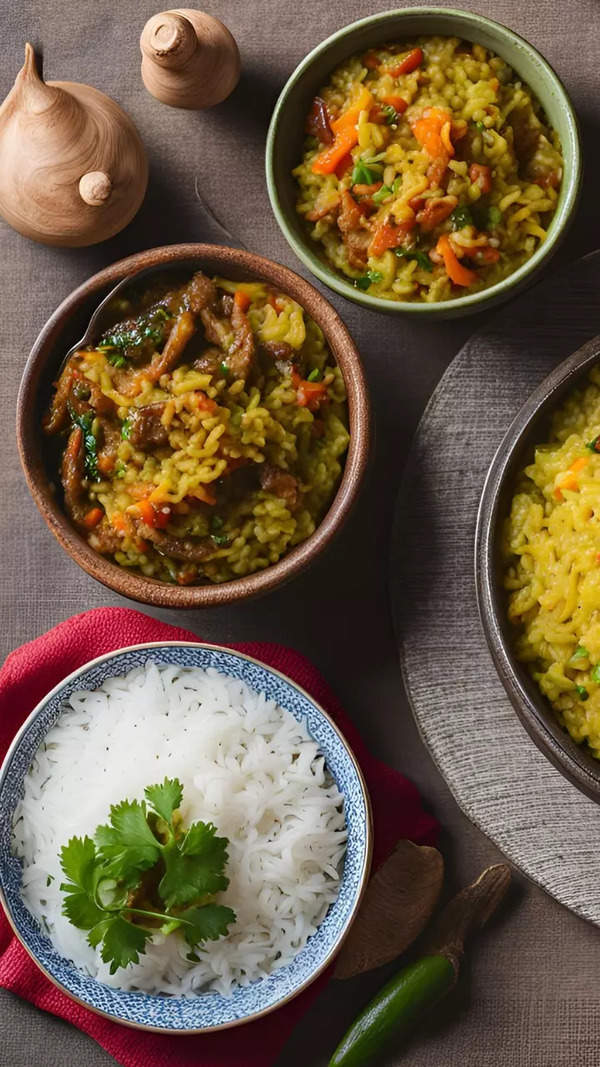
But there are still some who in spite of enjoying the thought of an alternative Iftar party, term these as non-Hyderabadi. Maisam Abedi, a professional from Banjara Hills says, "If we want to eat these, we can just go to a restaurant. For me Iftar is ghar-ka-khana. How can it be complete without good old biryani?" For him, an essentially Hyderabadi Iftar is not complete without khubuli (boiled chick pea with black pepper and coriander), haleem, paya and the humongous mound of basmati rice topped with a generous quarter of chicken or chunks of mutton, fondly known as the Hyderabadi dum biryani.
End of Article
FOLLOW US ON SOCIAL MEDIA







Hot Picks
TOP TRENDING
Trending Stories
In City
Entire Website
- GK for students: Top 8 Largest Mammals in the World
- Arvind Kejriwal Resignation Live Updates: 'Kejriwal will be back', says Atishi after staking claim; BJP questions CM-designate's 'background'
- India vs China Highlights, Asian Champions Trophy 2024 Final: Jugraj Singh stars as India beat China 1-0 to clinch record fifth title
- Kolkata Murder Supreme Court Hearing Live Updates: Court extends ex-RG Kar principal Ghosh, cop's custody by 3 days
- Maharashtra schools closed on Sep 18: Here’s why
- Communal tension hits Karnataka towns over Palestinian flags at rallies
- 'If any shame left ... ': AAP slams Swati Maliwal's remark on Atishi, says she should seek RS ticket from BJP
- Work on bridges gains pace to ease Ghodbunder jams
- NMDC Steel Plant Seeks 100 Officers of Vizag Steel Plant
- UGC NET Result 2024 Live Updates: NTA expected to announced final answer key, scorecards shortly
- 'Security breach': 1000s of pagers explode across Lebanon, many Hezbollah fighters hurt
- Sri Lanka presidential polls: What's at stake for India
- ‘Oxford returnee’ to Delhi CM: The rise and rise of Atishi
- 'No glorification of bulldozer justice': SC bans property demolition till Oct 1
- PM Modi to visit US from Sept 21-23 for Quad summit
- Pak players wave Chinese flag during India-China ACT final
- Rs 15cr gold crown from the Ambanis: Meet Mumbai’s richest Ganeshas
- Reliance Jio confirms outage, here’s what the company said
- 'Kejriwal will be back', says Atishi; BJP attacks CM-designate
- 'Congress, its ecosystem angry': PM Modi over Ganesh Puja with CJI

Popular Categories
Hot on the Web
Top Trends
Dominique PelicotUS Fed Rate CutIndia vs China Champions TrophyUPI Transaction LimitWhere to Watch India vs China Final Hockey MatchUPS vs NPS CalculatorKolkata Commissioner Manoj VermaNEET UG Admission CriteriaAtishiKolkata Doctor Rape CaseArvind Kejriwal Resignation LiveAli Khamenei TweetSuryakumar YadavVince McMahonTech LayoffsDonald TrumpLive Cricket Score
Trending Topics
Munawar FaruquiLuxury BrandCancer CauseKhatron Ke Khiladi 14Chinas EggAtishi Marlena Singh QualificationSunita AhujaGoat CollectionSalman Khan FarmhousePitra Paksha 2024CheetahsKangana RanautAditi Rao HydariDalljiet KaurHoliday DestinationVikas SethiReliance Jio DownApple iPhone 16 ProVirat KohliWordle Answer
Living and entertainment
Latest News
Pankaj Kapur is proud of son Shahid Kapoor’s film choices, calls him ‘the finest actor in the country’Mukhtar Ansari died of heart attack, not poisoning: UP's Banda district magistrate's report4 types of tea to improve gut health and ease digestive issuesMemeFi daily codes for 17 September 2024: Boost your earnings with daily codes and know how to maximizeKhatron Ke Khiladi 14: Shalin Bhanot hosts a fun party for his co-contestants Krishna Shroff, Abhishek Kumar, KaranVeer Mehra and othersDecoding how log analytics systems are enabling brands to derive maximum value from dataAnother Mpox suspected case in India: Man showing symptoms admitted to hospitalTaurus, Daily Horoscope Today, September 17, 2024: Anxiety and stress diminishLiza Colon becomes 1st Latina to win Best Supporting Emmy AwardSelena Gomez recreates practiced applause she learnt from TV show Friends after losing at Emmys 2024Former WWE superstar is no longer listed on their internal rostersBeyond Paychecks: Job satisfaction, work-life balance more important than salary for Gen Z workforce‘You is sleep or you can sleep’: Students prank Benglauru’s ‘pookie professor’ in viral videoHow ‘Oxford returnee’ Atishi became chief minister of DelhiWhy more couples aged 50 or older are getting divorcedThese are the most toxic fresh produce of 2024Congress condemns Shiv Sena MLA's 'Rs 11 lakh reward to cut Rahul Gandhi's tongue' remarkThe 3 Strongest Zodiac Signs: Powerhouses of the Zodiac Wheel
Copyright © 2024 Bennett, Coleman & Co. Ltd. All rights reserved. For reprint rights: Times Syndication Service